
Yesterday, we made what looks like a small change inside Acadeva. A few features were renamed, some icons were refreshed, and several descriptions were updated. To most people, it would probably seem like a routine product update. For us, however, it marked the end of a lesson we've been learning for almost two years.
The story starts in 2024.
That year, we participated in a hackathon and built a tool that could automatically generate quizzes from study materials. We called it Quithn. At the time, I thought it was a fantastic name. It sounded unique, futuristic, and unlike anything else on the market. There was just one problem: nobody knew how to pronounce it. Even some of the judges struggled with the name during presentations.
Fortunately, the product itself was good. We won the hackathon, celebrated the victory, and moved on. Looking back, that success probably prevented us from noticing a problem that was already there. Because Quithn worked, we assumed the name didn't matter.
Over time, that naming style spread across Acadeva. Whenever we built a new feature, there was a temptation to invent something distinctive. We came up with names like Calzygen, Recorde, and several others. To us, these names felt creative and memorable. They gave the product personality. What we failed to realize was that users were experiencing them very differently.
At first, we noticed that people struggled to pronounce the names. We brushed it aside and assumed familiarity would solve the problem. After all, people eventually learn the names of products they use every day. What became increasingly clear, however, was that pronunciation wasn't the real issue. The real issue was understanding.
When a student sees a feature called Quiz Maker, they immediately know what it does. The same goes for Math Solver or Lecture Explainer. The value proposition is obvious before they even click. But when they encounter a name like Quithn or Calzygen, there is a moment of hesitation. They have to stop and think. They have to guess. They have to learn the meaning before they can benefit from the feature.
Those moments seem small, but they add up. Every unnecessary second spent trying to understand the interface is friction. And friction is one of the fastest ways to make a product feel harder to use than it actually is.
This realization came up again during one of our team conversations yesterday. We started discussing how new users interact with Acadeva and how much mental effort is required just to understand what certain features do. The more we talked about it, the more obvious the solution became. We had spent years optimizing for names that sounded interesting when we should have been optimizing for names that communicate value instantly.
So we opened the codebase and started making changes.
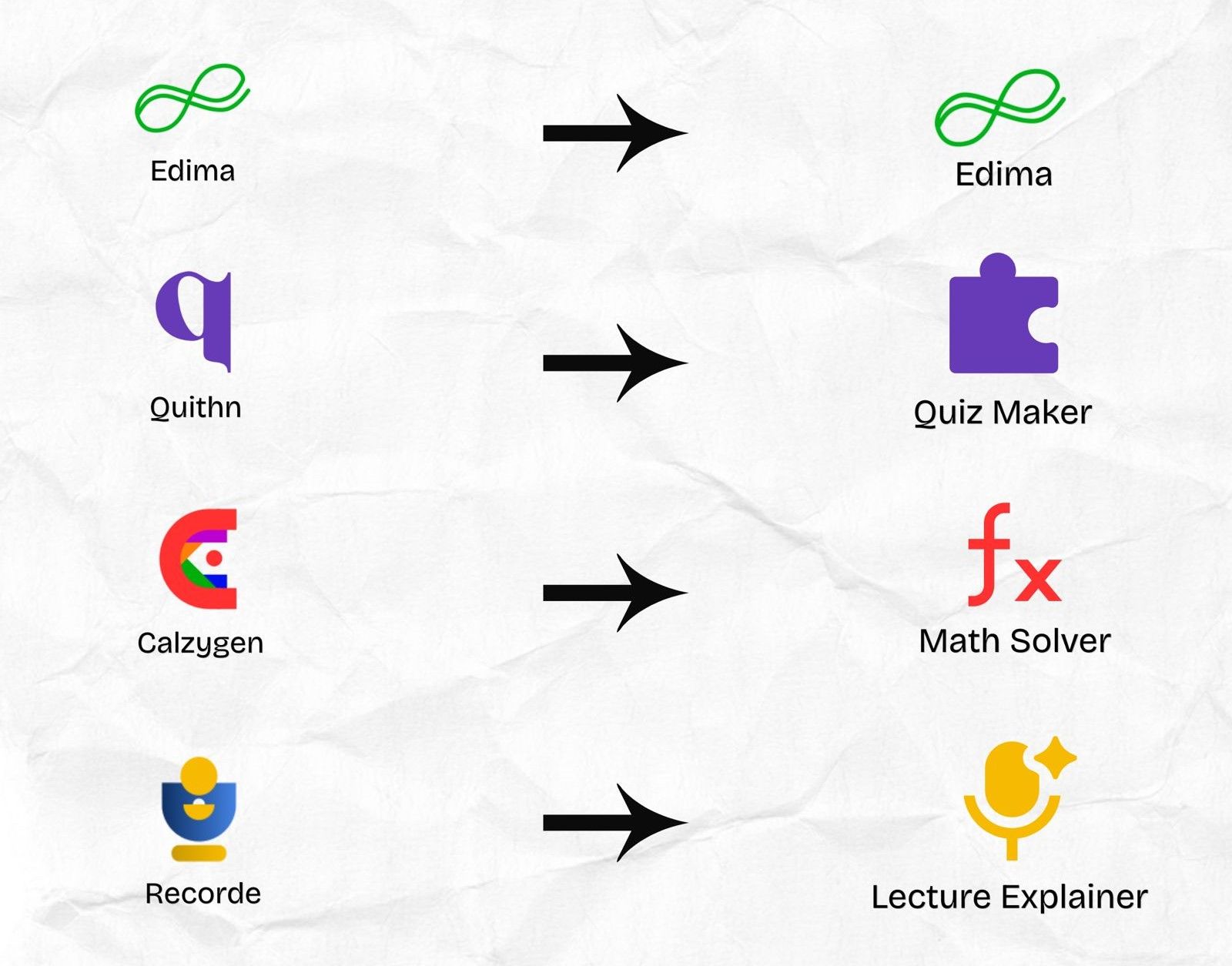
Alongside these changes, we refreshed icons across the New AI Task screen and updated titles and About pages throughout the platform.
The goal wasn't to make the app look newer. The goal was to make it easier to understand.
One of the humbling things about building products is realizing how differently users see them. As builders, we spend months living inside our products. We know every feature, every workflow, and every reason behind every design decision. Users don't have that context. They encounter everything for the first time. What feels obvious to us often isn't obvious to them.
That's why clarity matters so much. A feature name isn't just a label. It's part of the user experience. It's the first explanation a user receives. If that explanation creates confusion, then we've already made the product harder to use.
As Acadeva continues to grow, we'll keep looking for opportunities to simplify. Sometimes innovation is about adding new capabilities. Other times it's about removing obstacles that shouldn't have been there in the first place. This update is an example of the latter.
We're choosing clarity over cleverness, understanding over uniqueness, and simplicity over unnecessary complexity. Because at the end of the day, students open Acadeva to study, stay organized, and achieve their goals. They shouldn't have to spend time figuring out what our feature names mean before they can use them.
These changes are currently being rolled out and will reach all Acadeva users over the next few days. As they do, we'll continue gathering feedback and looking for other areas where we can make the platform easier to understand and easier to use.
The lesson for us has been simple: a feature doesn't become valuable because it has a clever name. It becomes valuable when students immediately understand what it can do for them. That's the experience we're working toward, one update at a time.